
Introduction – This Is Not a Normal Smartphone.
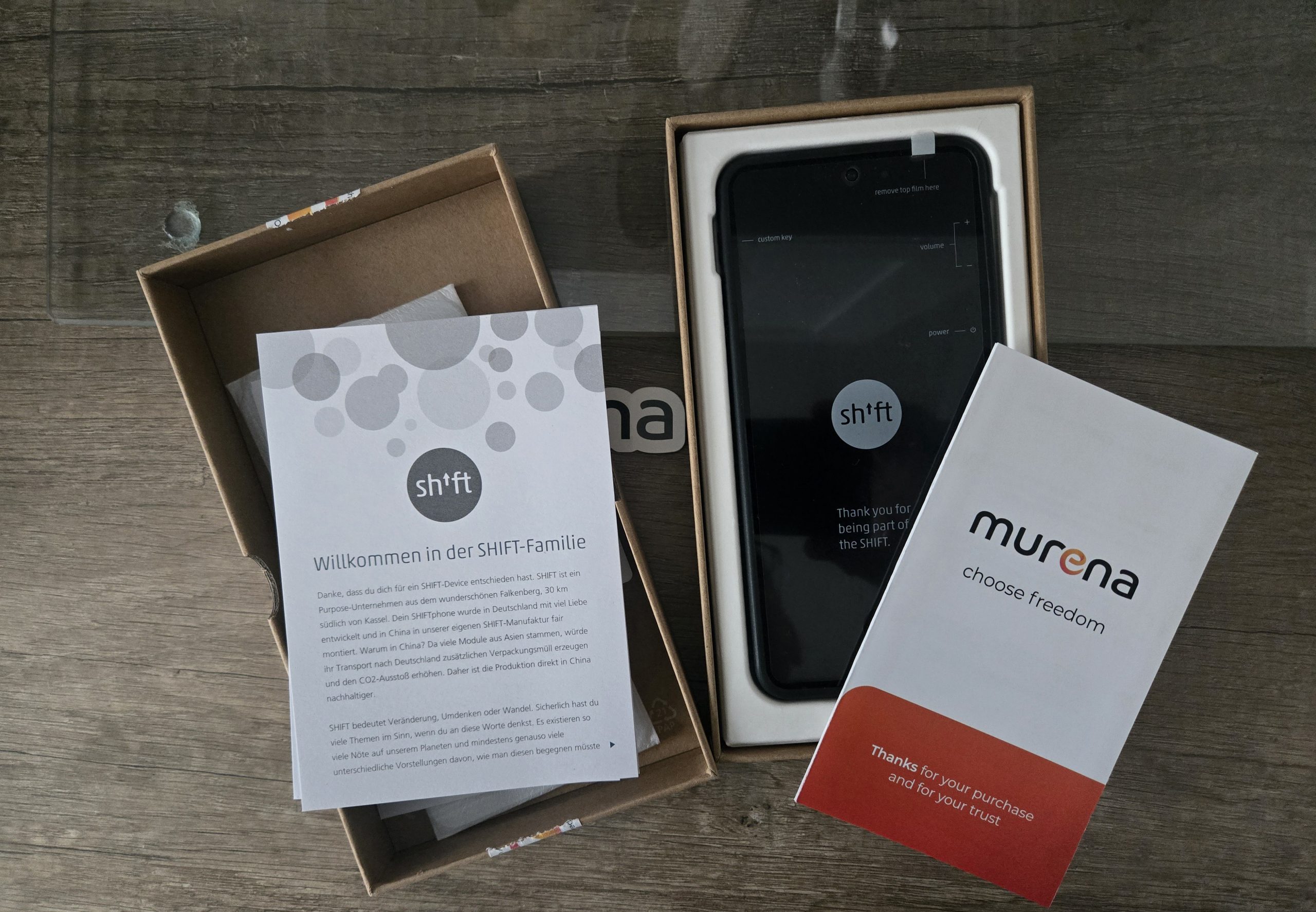
Every so often a phone comes along that doesn’t just want to be better than the competition, but different. The Murena Shiftphone 8.1 sits firmly in that category. This isn’t about shaving milliseconds off benchmarks, adding another AI gimmick, or squeezing one more camera lens onto the back. Instead, it asks a much bigger question: what if your smartphone actually respected you?
In a world where most phones are little more than data‑harvesting slabs tied tightly into vast advertising ecosystems, the Shiftphone 8.1 dares to step off that treadmill. Built in partnership with SHIFT and running Murena’s /e/OS, this device puts privacy, sustainability, and repairability at the very centre of its design. That alone makes it worthy of a closer look.
But ideals are one thing — living with a device day‑to‑day is another. Over the next couple of thousand words, we’re going to unpack exactly what the Shiftphone 8.1 gets right, where it compromises, and who it’s actually for.
Design & Build – Honest, Functional, Purposeful
The Shiftphone 8.1 doesn’t scream luxury when you first pick it up, but that’s entirely intentional. The design language here is all about function over fashion. Straight edges, sensible proportions, and a chassis that feels engineered rather than sculpted.
At 6.67 inches, the AMOLED display gives you plenty of screen real estate without pushing into tablet territory. Bezels are present — and proudly so — because this phone prioritises durability and repair access over chasing the latest aesthetic trends. It feels reassuringly solid in the hand, with a weight that reminds you there’s real substance inside.
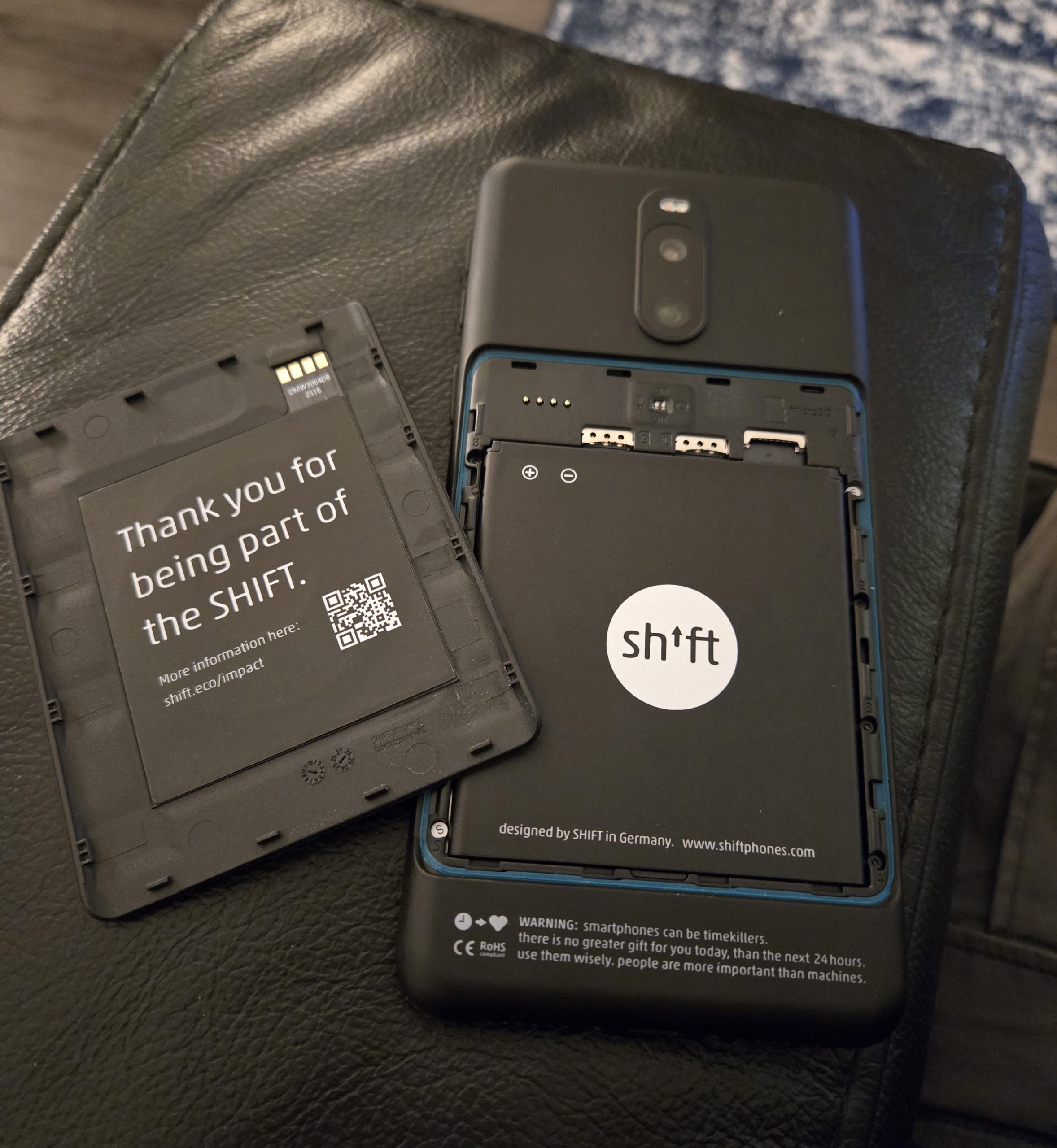
The rear panel is removable, and that single fact already puts the Shiftphone 8.1 in rare company in 2025. Being able to open your phone without heat guns, suction cups or fear is something most of us have forgotten was ever normal.
Display – Sensible, Sharp, and Easy on the Eyes
The AMOLED panel is bright, sharp, and perfectly pleasant to use. Full‑HD+ resolution is more than adequate at this size, and while it doesn’t push ultra‑high refresh rates or eye‑watering brightness numbers, it delivers where it matters: readability, colour accuracy, and efficiency.
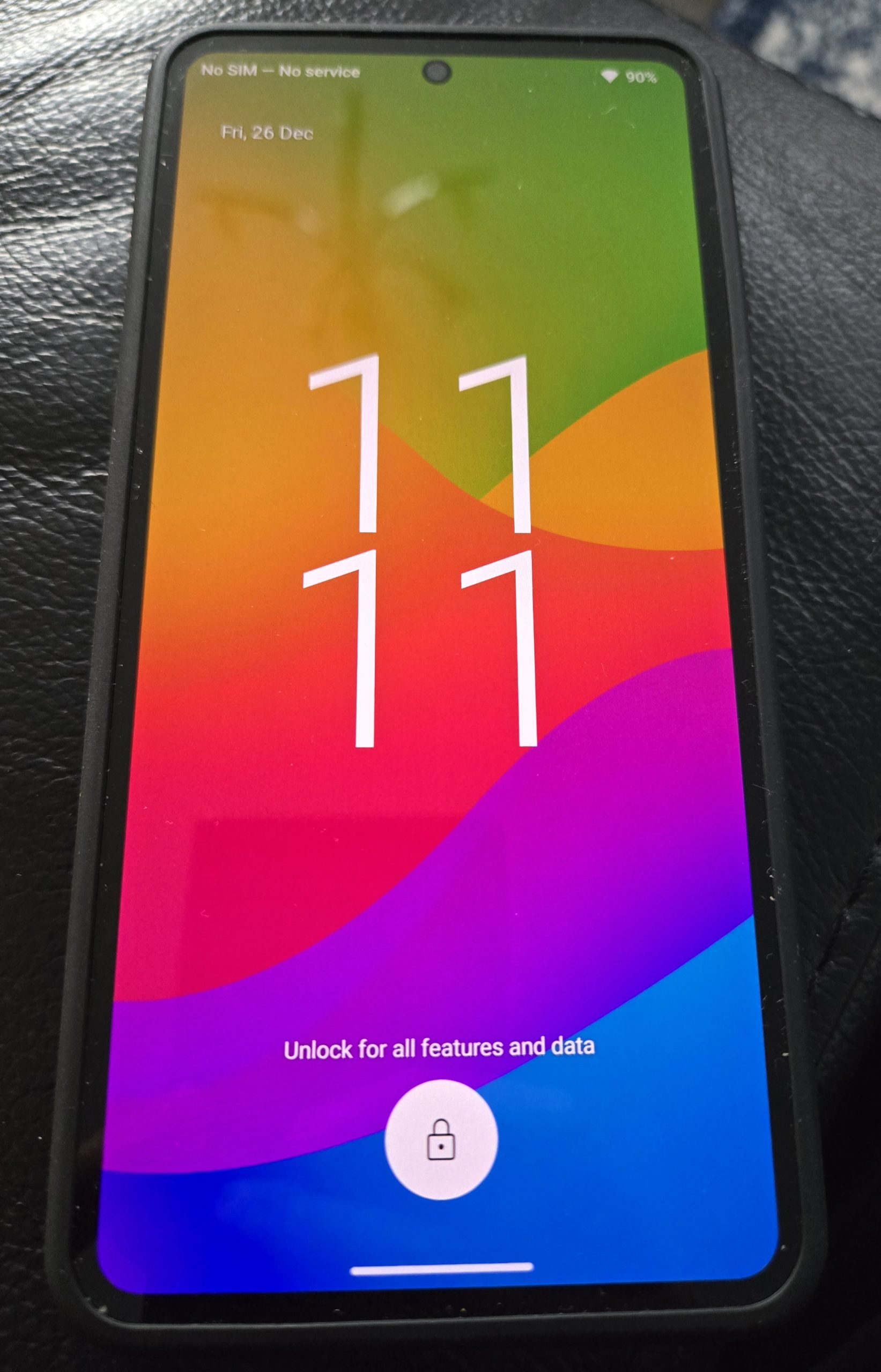
Watching videos, browsing the web, and reading articles all feel comfortable, and the lack of aggressive edge curvature is a blessing when it comes to accidental touches. This is a screen designed to be used, not just admired in a shop.
Performance – Mid‑Range Done Right
Performance is another area where expectations need to be set correctly. The Shiftphone 8.1 uses a capable mid-range Qualcomm chipset paired with generous RAM, and the result is a device that feels smooth and dependable rather than blisteringly fast.
Day-to-day interactions are fluid. App launches are quick, scrolling is smooth, and multitasking holds up well thanks to the available memory. I rarely encountered stutters during normal use, and the phone never felt sluggish during everyday tasks.
Where you will notice limitations is in more demanding scenarios. Heavy 3D gaming, advanced video editing, or prolonged high-load tasks will push the hardware harder than it’s designed for. That said, thermal performance is well managed — the phone doesn’t get uncomfortably hot, and sustained performance remains consistent.
Importantly, /e/OS feels lightweight and well-optimised. Without Google services running constantly in the background, system resources are used more efficiently, which helps the hardware punch above its weight.
In short, this is performance tuned for longevity and stability, not benchmark bragging rights — and that fits the overall ethos of the Shiftphone 8.1 perfectly.
/e/OS – Life Without Google (And Why That Matters).
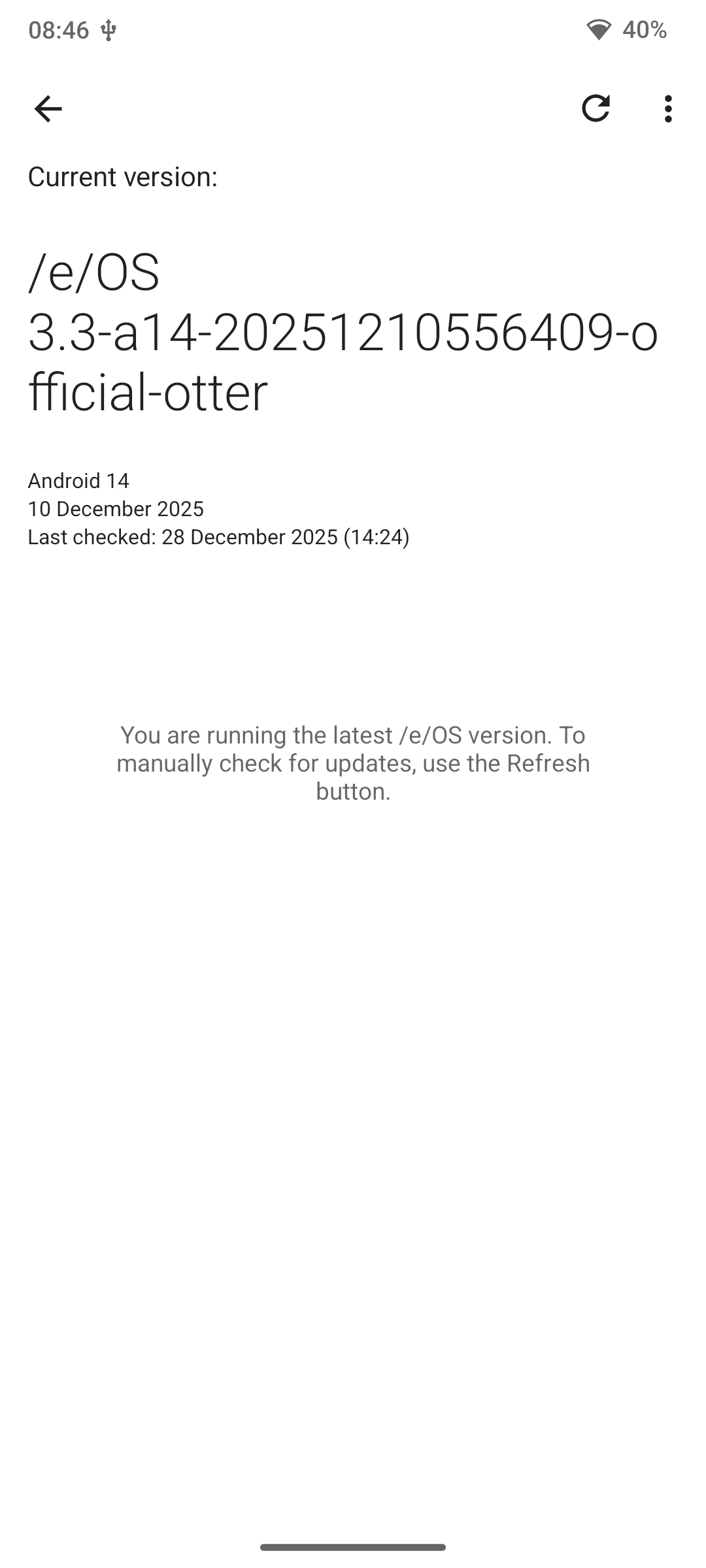
The software experience is the heart of the Murena Shiftphone 8.1, and it’s also where this device makes its boldest statement. Running /e/OS, the phone offers a fully usable Android-based operating system that deliberately removes Google services, Google tracking, and Google dependency from the equation.
For many users, it’s difficult to overstate just how radical this feels at first. We’ve become conditioned to think that Android is Google — Gmail, Maps, Drive, Play Services, and constant background syncing. /e/OS proves that this link is a choice, not a necessity.
Setup Without Surveillance
From the moment you power on the Shiftphone 8.1, the difference is obvious. There’s no forced Google account login, no permissions screens disguised as convenience, and no quiet background services hoovering up usage data. Instead, setup is refreshingly straightforward and transparent.
You can create a Murena account if you want cloud features like email, contacts, and calendar syncing, but crucially, this is optional, not mandatory. You remain in control from the very first screen.
A Familiar Yet Refreshingly Clean Interface
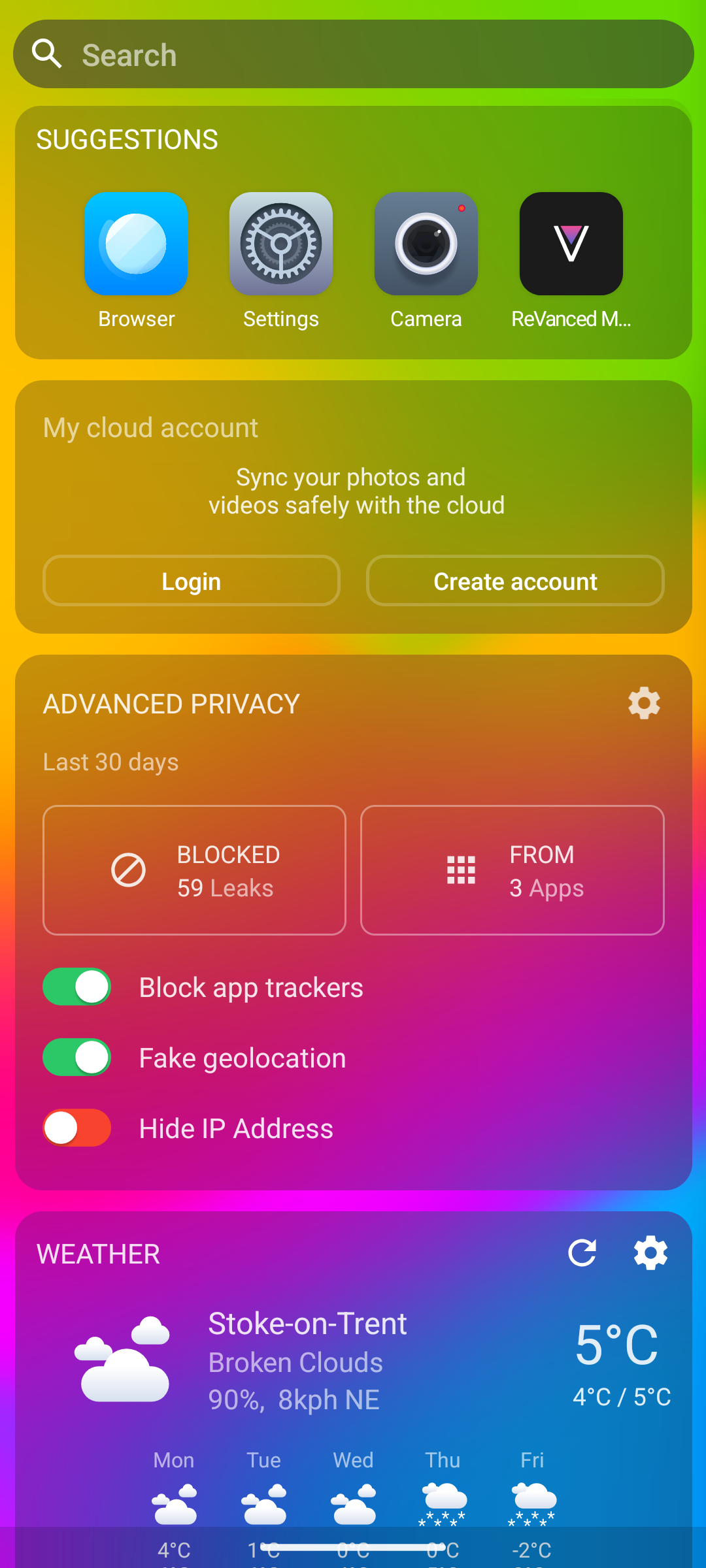
Visually, /e/OS feels reassuringly familiar to anyone who has used Android before. The layout, navigation gestures, and system settings won’t intimidate existing Android users, but there’s a noticeable absence of clutter. Without Google apps duplicating functions or demanding attention, the OS feels lighter and calmer.
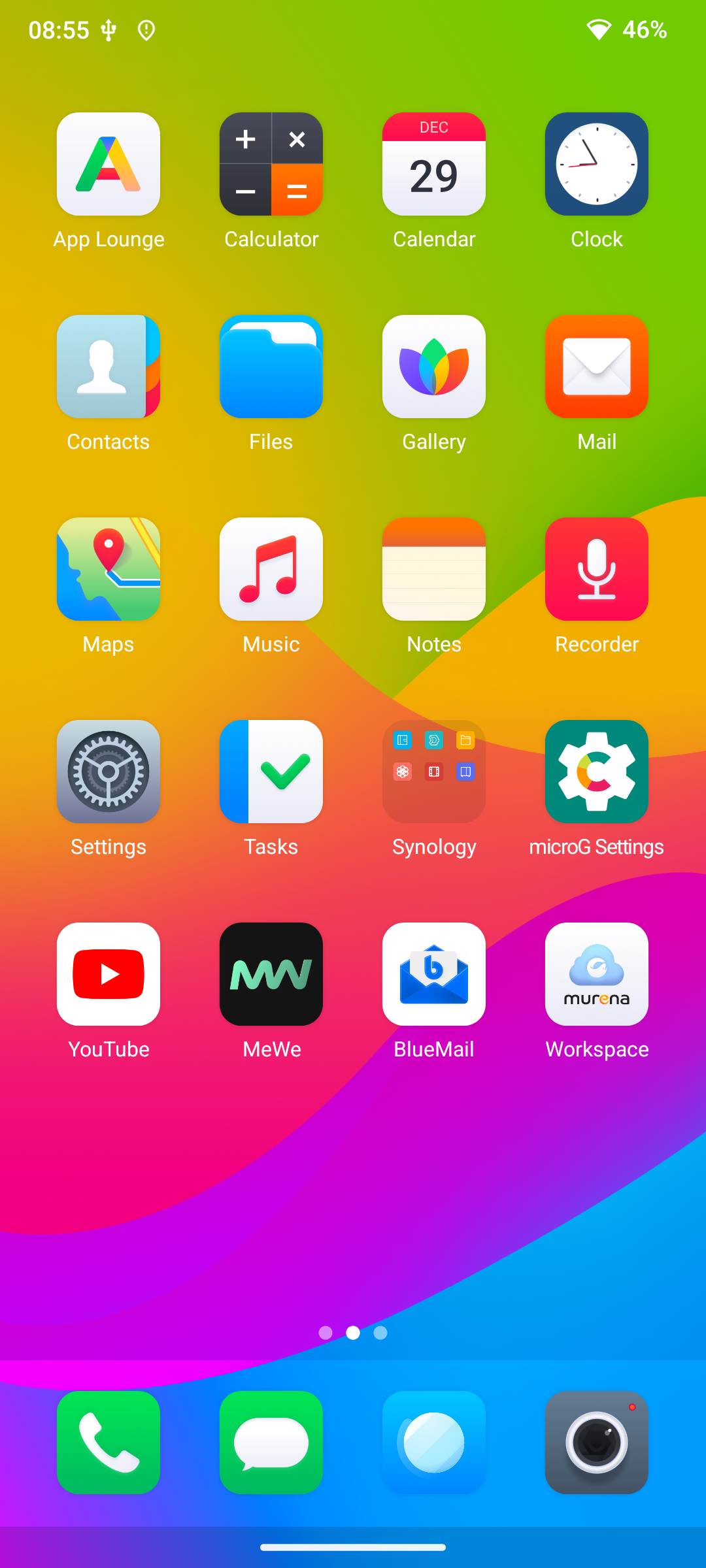
System menus are clearly laid out, and privacy-related controls are given prominence rather than buried several layers deep. This alone changes how you interact with your phone — privacy becomes a conscious, visible part of daily use rather than an afterthought.
App Lounge – Apps With Transparency
Murena’s App Lounge is one of the most important pieces of the /e/OS puzzle. At a glance, it looks like a familiar app store experience, but dig a little deeper and you’ll notice some crucial differences.
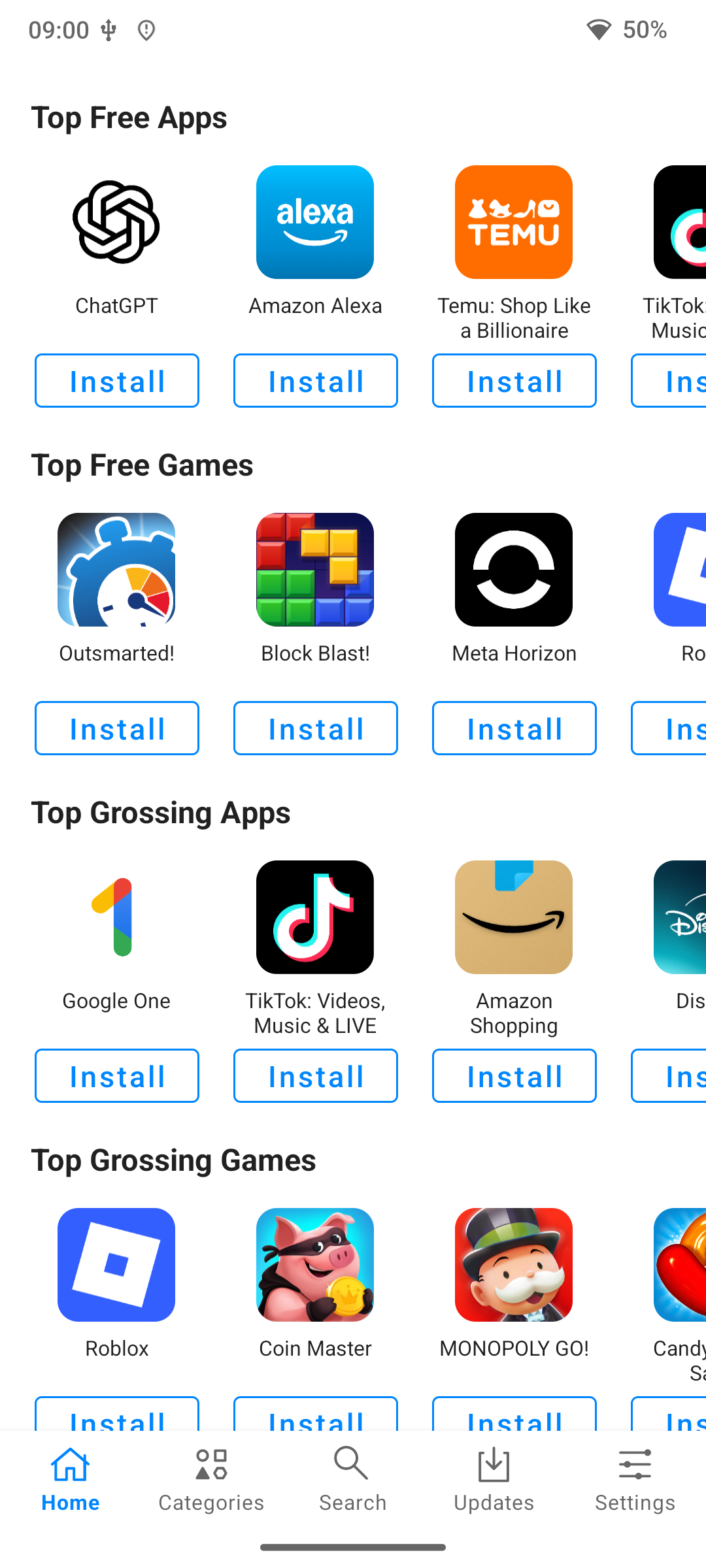
Each app is presented with a privacy score, showing how much tracking it contains and what permissions it requests. This level of transparency is genuinely eye-opening. Apps many of us install without a second thought are suddenly revealed to be aggressively data-hungry, while others turn out to be far more respectful than expected.
The App Lounge pulls apps from multiple sources, including open-source repositories and trusted mirrors. For many popular apps, installation is seamless, and updates arrive automatically — just as you’d expect from a mainstream app store.
Living Without Google Play Services
Of course, the big question is compatibility. Without Google Play Services, some apps behave differently, and a few won’t work at all. Push notifications can be less reliable for certain services, and apps that rely heavily on Google’s APIs — particularly banking or ride-hailing apps — may require workarounds.
For everyday essentials like messaging, browsing, email, navigation, and media consumption, there are excellent alternatives available. Over time, you start to realise just how many Google services you were using out of habit rather than necessity.
And here’s the key point: you are no longer being tracked by default. Location data isn’t constantly logged. Usage patterns aren’t silently uploaded. Advertising profiles aren’t being built in the background. That peace of mind is difficult to quantify, but once experienced, it’s hard to give up.
Tracking Protection That Actually Feels Useful
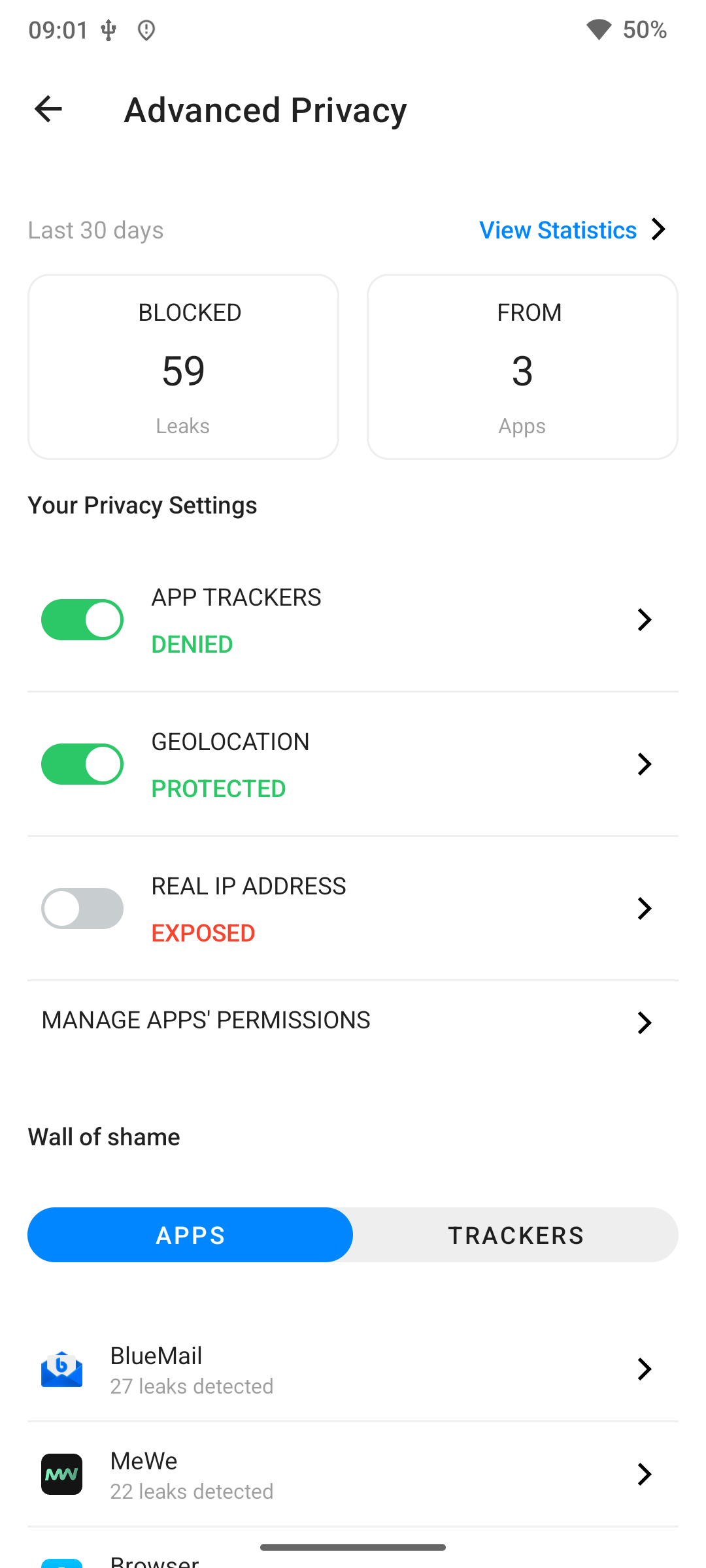
/e/OS includes built-in tracking protection that actively blocks known trackers at the system level. Rather than relying on individual apps to behave responsibly, the OS enforces boundaries on your behalf.
You can see which apps attempt to track you, how often, and in what way. This kind of visibility fundamentally changes your relationship with your phone. It’s no longer a black box — it’s something you understand.
Privacy – Hardware and Software Working Together
The Shiftphone 8.1 goes further than most by including physical hardware kill switches for the microphone and cameras. Flip the switch, and those components are electrically disconnected — not muted, not software‑disabled, but physically off.
Combined with /e/OS’s granular permission controls and tracking protection, this creates one of the most privacy‑respecting smartphone experiences currently available.
This isn’t just marketing. It’s real, tangible control.
Repairability – A Phone You Can Actually Fix
Perhaps the most refreshing aspect of the Shiftphone 8.1 is its modular, repair‑friendly design. Battery replacements take minutes, not hours. Screens can be swapped without specialist tools. Ports, cameras, and other components are designed to be replaced individually.
SHIFT actively encourages repairs and long‑term ownership, even offering a buy‑back or return scheme at end of life. In an industry obsessed with yearly upgrades, this approach feels quietly revolutionary.
Camera – Capable, But Not Class‑Leading
The dual 50MP camera setup delivers respectable results in good lighting, with decent detail and natural colours. Low‑light performance is acceptable but not exceptional, and the camera app itself feels less polished than those found on mainstream flagships. This is very much a functional camera system — good enough for everyday photography, but unlikely to excite mobile photography enthusiasts.
Camera performance is one of the areas where the Shiftphone 8.1 most clearly reveals its priorities. This is not a phone built to compete with Pixel, iPhone, or Samsung Ultra devices on computational photography. Instead, it offers a competent, reliable camera system that gets the job done — without leaning on heavy AI processing or cloud-backed tricks.
The dual 50MP setup delivers good results in daylight. Images are sharp, colours are generally natural rather than oversaturated, and dynamic range is respectable. I found that photos taken outdoors, landscapes, and everyday snaps of people all came out well enough for sharing and casual use.
Where the camera falls behind flagship competition is consistency and software polish. The camera app itself feels functional rather than refined, and you don’t get the same instant, always-perfect results you might be used to from Google’s computational magic. Low-light photography is serviceable but clearly mid-range — noise creeps in, and details soften unless you take the time to steady the shot.
Video performance is similarly adequate. 4K recording is supported, and footage is perfectly watchable, but stabilisation and autofocus don’t feel as confident as they do on premium devices. This is very much a hardware-first camera, not one propped up by aggressive post-processing.
For many users, that will be absolutely fine. If photography is your top priority, this isn’t the phone you buy. If you want a camera that respects your privacy and doesn’t rely on cloud-based enhancement, the Shiftphone 8.1 makes a compelling case.












Battery Life – Practical, Not Spectacular
Battery life is solid but unremarkable. A full day of moderate use is achievable, and the removable battery adds peace of mind for long‑term ownership. Fast charging isn’t the headline here — longevity is.
Battery life on the Shiftphone 8.1 is best described as sensible. The removable battery is a rare and welcome sight, and while the capacity won’t win any endurance awards, it aligns with the phone’s broader philosophy of longevity over raw numbers.
In real-world use, I found that a full day was achievable with moderate usage — messaging, browsing, navigation, and media playback. Heavy users may find themselves reaching for a charger by evening, particularly if they rely on 5G or extended screen-on time.
What really changes the battery conversation here is repairability. When battery health inevitably degrades after a couple of years, replacing it is quick, affordable, and stress-free. That alone dramatically extends the usable lifespan of the device.
Charging speeds are fine but unremarkable. This isn’t about topping up in ten minutes — it’s about keeping the phone usable for years. And in that context, the Shiftphone 8.1 delivers.
Who Is This Phone Really For?
The Shiftphone 8.1 isn’t trying to convert everyone. It’s for users who:
- Care deeply about digital privacy
- Want control over their hardware and software
- Value sustainability and repairability
- Are comfortable stepping outside mainstream ecosystems
If that sounds like you, this phone makes a compelling case.
Verdict – A Statement as Much as a Smartphone
Good Points :-
-
Excellent privacy-first software (/e/OS)
No Google services by default, no forced accounts, and no background tracking — a genuinely de-Googled Android experience. -
Strong transparency around app behaviour
App Lounge privacy scores clearly show which apps track you and how intrusive they are, encouraging informed choices. -
No reliance on Google Play Services
Most everyday tasks work perfectly well without Google, proving it’s possible to live outside that ecosystem. -
Hardware privacy kill switches
Physical switches for camera and microphone provide true peace of mind that software alone can’t offer. -
Highly repairable, modular design
Battery, screen, ports, and other components can be replaced easily, extending the phone’s lifespan significantly. -
Removable battery
A rare feature in modern smartphones and a huge win for long-term ownership. -
Solid everyday performance
Smooth, reliable operation for daily tasks, helped by lightweight software and generous RAM. -
Good AMOLED display
Sharp, bright, and comfortable to use without chasing gimmicks like extreme refresh rates. -
Ethical and sustainable focus
Designed to reduce e-waste and encourage responsible ownership rather than frequent upgrades. -
Stable, calm software experience
No bloatware, no aggressive feature creep, and no intrusive system prompts.
Bad Points:-
-
App compatibility can be hit-and-miss
Some banking, ride-hailing, and notification-dependent apps don’t work fully without Google Play Services. -
Learning curve for new users
Living without Google requires adjustment, experimentation, and a willingness to change habits. -
Camera software lacks polish
Image quality is decent, but camera apps and processing can’t match flagship computational photography. -
Low-light camera performance is average
Noise and loss of detail are noticeable in challenging lighting conditions. -
Battery life is only average by modern standards
A full day is achievable, but heavy users may need a top-up. -
Charging speeds are unremarkable
No ultra-fast charging to rival modern flagships. -
Mid-range performance won’t satisfy power users
Not designed for heavy gaming or demanding creative workloads. -
Feels expensive compared to raw specs
The value lies in ethics, privacy, and repairability — not benchmark numbers. -
Not a plug-and-play mainstream phone
This isn’t a device for users who want everything to work exactly like a Samsung or Pixel.
The Murena Shiftphone 8.1 isn’t perfect, and it doesn’t pretend to be. What it offers instead is choice — the choice to opt out of surveillance‑driven ecosystems, the choice to repair rather than replace, and the choice to own your device rather than rent it.
For the right user, that makes it one of the most interesting smartphones you can buy today. The ShiftPhone is available from the Murena Website
Long‑Term Ownership – What Happens After the Honeymoon?
One area where most smartphone reviews fall short is long‑term ownership. We talk about first impressions, week‑one performance, maybe battery life after a few days — but very rarely do we consider what living with a phone for years actually looks like. The Murena Shiftphone 8.1 is clearly designed with that longer horizon in mind.
Because the hardware is modular and the software is not tied to aggressive upgrade cycles, this is a phone that actually improves with familiarity. The more time you spend with /e/OS, the more comfortable you become managing permissions, choosing privacy‑respecting alternatives, and understanding exactly what your phone is (and isn’t) doing in the background.
Unlike mainstream devices that often feel slower or more cluttered after a year or two of updates, the Shiftphone 8.1 feels deliberately restrained. There’s no constant feature creep, no intrusive AI tools being pushed via updates, and no sense that the device is slowly being bent toward advertising or data extraction.
This makes the phone particularly appealing for users who want stability. Once you’ve set it up, chosen your apps, and dialled in your preferences, it largely stays out of your way.
Sustainability Beyond Buzzwords
Sustainability is one of those words that gets thrown around a lot in tech marketing, but often means very little in practice. With the Shiftphone 8.1, it’s not just a slogan — it’s baked into the entire ownership model.
The ability to replace individual components massively reduces electronic waste. A worn‑out battery doesn’t mean discarding the entire device. A damaged USB‑C port doesn’t require an expensive mainboard replacement. Even cosmetic wear can be addressed without replacing perfectly functional electronics.
SHIFT’s approach also includes long‑term availability of spare parts and transparent pricing, which is crucial. Repairability only matters if parts are actually accessible — and here, they are.
There’s also a psychological shift that happens when you own a repairable device. You’re less inclined to treat it as disposable, and more inclined to maintain it. That mindset alone is a step in the right direction.
Comparing the Alternatives
It’s impossible to review the Shiftphone 8.1 without mentioning its closest philosophical rivals.
Versus Fairphone 6
The Fairphone 6 is arguably the most obvious comparison. Both devices champion repair-ability and ethical sourcing. Where the Shiftphone differentiates itself is in software philosophy. Fairphone still ships with standard Android and Google services by default, whereas Murena’s /e/OS makes privacy the default state.
For users who want sustainability leaving Google behind, Fairphone supply a version of the Fairphone 6 running Murena’s operation available from Murena’s Website
Versus Pixel with GrapheneOS
A Pixel running GrapheneOS offers exceptional security and privacy, but at the cost of repairability and hardware openness. You’re still dealing with sealed designs and limited user repair options.
The Shiftphone 8.1 trades some raw performance and camera quality for physical control, modularity, and user serviceability. It’s a philosophical fork in the road.
The Learning Curve – Be Honest With Yourself
One of the most important things to understand before buying the Shiftphone 8.1 is that this is not a zero‑effort phone.